
 English
 Shqip
Shqip لالعربية
 Polski
 رسی
رسی Deutsch
 Русский
 Français
 한국어
한국어 Nederlands
 Čeština
 Bahasa Melayu
 Português
 日本語
日本語 Svenska
 Kiswahili
 ไทย
ไทย Türkçe
 Español
 Italiano
 हिन्दी
 Bahasa Indonesia
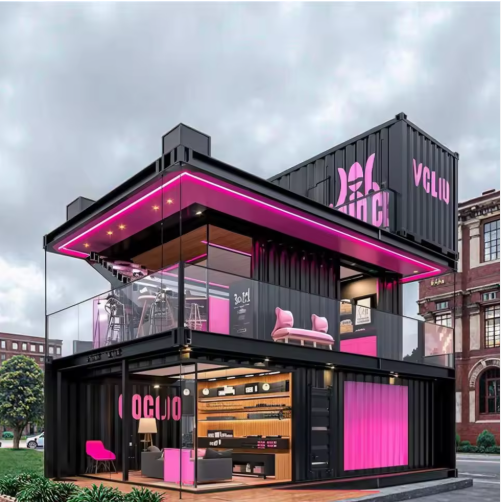
Modern Color Steel Container Houses for Tea, Coffee Shops and Snack Bars: The Container Revolution Is Transforming Main Street America
From shipping containers to thriving storefronts—how a new generation of entrepreneurs is building businesses faster and cheaper
MIAMI — Walk through any bustling commercial district in America today, and you will notice something unusual: sleek, modern buildings crafted from repurposed shipping containers, serving everything from artisanal coffee to fusion tacos and craft cocktails.
What began as a fringe architectural experiment has become a defining feature of street-level commerce. Across the United States, entrepreneurs are discovering that container-based businesses offer a compelling alternative to traditional brick-and-mortar storefronts—one that costs significantly less, deploys in weeks rather than months, and delivers the mobility and flexibility that modern market conditions demand.
At the forefront of this transformation is SXKON, a Shanghai-based manufacturer that has quietly become a major supplier of commercial-grade container solutions to the American market. The company’s Creative Container Mobile House line—specifically engineered for tea, coffee shops and snack bars—has found particular traction among U.S. food and beverage entrepreneurs looking to launch profitable operations without the crushing debt of conventional construction.
This report examines how container-based food businesses are reshaping American commerce, the economics driving the shift, and what aspiring entrepreneurs need to know before making the leap.
The Container Economy: By the Numbers
The economics of container-based commercial spaces are difficult to ignore.
A container shop built from a repurposed shipping container costs 30 to 50 percent less than constructing a traditional storefront of comparable size. Where a conventional brick-and-mortar buildout might take six to eighteen months from permitting to opening, a container café can be ready for business in as little as four to six weeks.
The global shipping container market is projected to expand to USD 21.5 billion by 2033—a figure that signals a fundamental market shift rather than a passing trend. In North America alone, the container housing market now holds 37.1 percent global market share, with the U.S. market projected to reach USD 42.67 billion by 2032.
For food entrepreneurs, the numbers are even more compelling. Traditional restaurant buildouts typically require $200,000 to $500,000 in upfront capital, not including land acquisition or long-term leases. A fully outfitted container-based café or snack bar, by contrast, can be delivered for a fraction of that investment.
“The economics just make sense,” says Michael Torres, a Texas entrepreneur who now operates multiple SXKON units for pop-up hospitality businesses. “Traditional construction bankrupts small entrepreneurs. SXKON’s intelligent mobility cabins turn concepts into cash flow in less than 30 days.”
Why Container-Based Food Businesses Are Exploding
Several converging factors explain the rapid adoption of container-based food businesses across the United States.
Speed to Market
In the food and beverage industry, time is money. Traditional construction projects are notorious for delays—permitting setbacks, supply chain disruptions, labor shortages, and weather-related stoppages can stretch a six-month buildout into a two-year ordeal.
A container café, by contrast, can be designed, transported, assembled, and opened in a matter of weeks. The structure arrives pre-fabricated, with walls already standing and systems pre-installed. For seasonal businesses, pop-ups, or entrepreneurs eager to test a new concept, the reduced timeline translates directly into revenue.
Cost Certainty
Conventional construction budgets are notoriously unpredictable. Material costs fluctuate, labor estimates change, and unforeseen site conditions routinely add tens of thousands of dollars to final expenses. Container construction offers a different model: the unit is built in a controlled factory environment, with costs fixed at the time of order.
Most container modifications—including insulation, electrical systems, plumbing, windows, and interior finishes—can be completed off-site, reducing on-site labor hours and eliminating many of the variables that drive traditional construction overruns.
Mobility and Flexibility
Unlike a traditional restaurant, which is permanently anchored to a single location, a container-based food business can be relocated when market conditions shift. A coffee kiosk that underperforms in one neighborhood can be moved to a busier district the following week. A snack bar that thrives at summer festivals can reposition to a holiday market in winter.
This mobility is particularly valuable in an era of changing consumer behavior. Remote work has reduced weekday foot traffic in some downtown districts while increasing demand in suburban and residential areas. Container businesses can adapt to these shifts in ways that fixed-location competitors cannot.
Sustainability as a Market Advantage
Modern consumers increasingly prioritize businesses that demonstrate environmental responsibility. Each repurposed shipping container keeps approximately 2.5 tons of steel out of landfills—steel that would otherwise require new mining and manufacturing to produce.
Beyond the environmental benefits, sustainability sells. Many container businesses integrate solar panels, rainwater collection systems, and energy-efficient appliances, creating operational savings while appealing to eco-conscious customers.
Social Media Appeal
Container-based businesses are inherently photogenic. The industrial-chic aesthetic—crisp steel lines, bold paintwork, floor-to-ceiling glass doors, and outdoor seating areas—creates an environment that customers instinctively photograph and share. For small businesses competing for attention in crowded markets, this organic social media exposure is invaluable.
The SXKON Difference: Engineering for Commercial Success
Not all container structures are created equal. SXKON has distinguished itself in the American market through a combination of engineering rigor, commercial-grade specifications, and a transparent approach to quality certification.
The company, founded in 2008, holds ISO 9001 and ISO 14001 certifications and has delivered more than 18,000 prefabricated units to 42 countries. Its 20FT and 40FT Creative Container Mobile Houses are constructed with 2.5 mm Corten A steel and 75 mm rock-wool insulation, tested to withstand wind speeds of 150 km/h and seismic activity up to magnitude 8.0.
What sets SXKON apart for commercial food applications is its pre-engineered approach to food service requirements. The company offers configurations with pre-installed commercial electrical panels (110V/220V switchable), PEX plumbing routed to NSF-compliant locations, and HVAC sleeves positioned for optimal airflow through service window areas.
Perhaps most significantly, SXKON’s units arrive in a flat-pack format that eliminates the need for cranes or heavy equipment. Two workers can deploy the unit in under six hours, unfolding and locking the structure into place without specialized machinery.
“Unlike traditional food trucks, our container houses provide 180 square feet of usable space—that’s three times more prep area than average food vehicles,” explains SXKON’s chief designer Mark Chen. The company’s patent-pending fold-out mechanism expands operational space in under 90 seconds.
From Concept to Cash Flow: Real-World Business Results
Container-based food businesses are not just theoretically efficient—they are delivering measurable financial results for entrepreneurs across the United States.
In Austin, Texas, two entrepreneurs opened DripBox Coffee inside a 20-foot custom container outfitted with a walk-up service window and solar panels. Their total investment: approximately $35,000. First-year revenue: $280,000. The business broke even in eight months and expanded to three locations within two years.
In Miami, SkySip Rooftop Bar stacked two 40-foot containers atop a downtown parking garage, creating a stunning open-air cocktail lounge with panoramic city views. The $120,000 investment generates approximately $500,000 in annual revenue, with consistent weekend sellouts and zero property costs due to a revenue-sharing partnership with the garage owner.
In Sacramento, TacoCueva began as a summer pop-up inside a 40-foot container. The $70,000 investment generated sufficient profits to fund a permanent brick-and-mortar location and two branded food trucks—while keeping the original container operating at festivals and events.
For SXKON customers specifically, the results are equally impressive. Michael Torres, who operates multiple SXKON units in Texas, reports revenue per event ranging from $8,500 to $12,000 at music festivals—representing a 4.3x return on investment compared to tent-based setups. His units have survived 75 mph desert winds with zero structural damage claims.
Beyond Coffee Shops: The Expanding Universe of Container Commerce
While coffee shops and snack bars remain the most common applications, container-based commercial spaces are proliferating across a widening range of food and beverage concepts.
In Nashville, Iron Prairie Brewing Co. added a container-based outdoor taproom beside its main building, incorporating a full bar, climate-controlled merchandise container, and ADA-compliant restrooms. The $210,000 investment increased weekend foot traffic by 55 percent.
Across the country, entrepreneurs are using containers for:
Pop-up retail kiosks at farmers markets and street fairs
Dessert and ice cream stands in seasonal tourist locations
Wine bars and tasting rooms at vineyards and urban entertainment districts
Quick-service restaurants in corporate campus settings
Food halls created by clustering multiple containers into a single destination
In Yonkers, New York, shipping containers have been converted into compact coffee bars near busy transit hubs, pop-up retail kiosks at local street fairs, and artist studios in community parks.
Navigating the Regulatory Landscape
For entrepreneurs considering a container-based food business, zoning and permitting regulations require careful attention. Requirements vary significantly by municipality, and what works in one city may be prohibited in another.
Most jurisdictions permit container-based food businesses under existing mobile food vendor regulations. In New Orleans, mobile food trucks are permitted in any non-residential zoning district, though operators must obtain written permission from property owners when the vendor is not the site owner.
In Texas, new statewide regulations taking effect in July 2026 require mobile food vendors to hold a state-issued license from the Department of State Health Services, with local permits being phased out. Spokane, Washington, permits mobile food vending on public streets in Neighborhood Retail and Community Business zones.
Entrepreneurs should also verify local health department requirements for food preparation areas, three-compartment sinks, handwashing stations, and ventilation systems. While container units can be pre-configured to meet these standards, approval processes vary by jurisdiction.
Overcoming Container Business Challenges
No business model is without challenges, and container-based food businesses have their own set of considerations.
Climate control remains a critical concern, particularly in extreme environments. High-quality insulation—such as the 75 mm rock-wool insulation used in SXKON units—is essential for maintaining comfortable interior temperatures. Units with R-values of 18 to 22 can perform effectively in temperatures ranging from -40°F to 120°F.
Utility access requires advance planning. Container businesses need reliable connections to water, power, and waste disposal at each operating location. Many successful operators maintain agreements with host properties that provide utility access for a flat daily or monthly fee.
Limited interior space demands efficient workflow design. Successful container businesses optimize every square foot, often using linear or L-shaped kitchen configurations to maximize prep area while maintaining customer service capacity.
Permitting variance can be challenging, particularly in historic districts or areas with restrictive zoning codes. In Austin, for example, container businesses in heritage zones required custom facade treatments—an additional expense that entrepreneurs should factor into their budgets.
The Future of Container Commerce
The container-based food business model is still in its early stages of adoption, but momentum is building rapidly.
Major cities across North America are increasingly embracing container shops as a solution for revitalizing underused public spaces, from empty lots in urban cores to pedestrian plazas in suburban downtowns. Many municipalities are actively supporting container-based small businesses through reduced permitting fees, streamlined approval processes, and affordable lease arrangements for entrepreneurs testing new concepts.
The trend extends beyond the United States. In Europe, container retail villages have become staples of urban life, offering rotating lineups of small businesses that keep commercial spaces fresh and dynamic. In South Africa, Plato Coffee started with a single container café and has since expanded to nearly 60 locations nationwide, employing approximately 350 people.
As traditional construction costs continue to rise and consumers increasingly value flexibility, sustainability, and unique experiences, container-based businesses are positioned for continued growth. The question is no longer whether containers can work for food and beverage retail—but how quickly the model will scale.
Practical Guidance for Aspiring Container Entrepreneurs
For entrepreneurs considering a container-based food business, several factors merit careful consideration.
Define your concept clearly before ordering. Container interiors are most efficiently configured when designed for a specific purpose. General-purpose units can be adapted, but pre-planning your workflow, equipment needs, and customer service approach will yield better results.
Research local regulations before committing. Zoning, health department, and fire code requirements vary dramatically by location. Some jurisdictions welcome container businesses; others impose prohibitive restrictions. Investigate your target market before placing an order.
Invest in quality insulation and climate control. A container is essentially a steel box—without proper insulation, interior temperatures will mirror exterior conditions. Units with inadequate insulation become unusable in extreme heat or cold.
Plan for mobility from the start. Even if you intend to operate from a fixed location, designing your container for relocation provides valuable optionality. If a location underperforms, or if a better opportunity emerges elsewhere, the ability to move can save your business.
Budget for branding and signage. A container’s steel exterior accepts vinyl wraps, magnetic signage, or custom paint. Professional branding turns your container into a marketing asset and helps you stand out in crowded markets.
Consider solar-ready configurations. Off-grid capability provides flexibility for locations without reliable utility connections and reduces ongoing energy costs. Many manufacturers offer solar-ready roof connections as standard or optional features.
Conclusion: A New Model for American Small Business
The rise of container-based food businesses represents more than an architectural trend. It reflects a fundamental shift in how entrepreneurs think about commercial space—valuing flexibility over permanence, speed over bureaucracy, and sustainability over excess.
For food and beverage entrepreneurs burdened by the crushing costs of traditional construction, container-based businesses offer a viable path forward. Lower capital requirements, faster deployment times, and operational flexibility create opportunities that were previously unavailable to aspiring business owners with limited resources.
As Michael Torres, the Texas entrepreneur who now operates multiple SXKON units, puts it: “Traditional construction bankrupts small entrepreneurs. SXKON’s intelligent mobility cabins turn concepts into cash flow in less than 30 days.”
For the thousands of Americans dreaming of launching their own coffee shop, snack bar, or food business, the container revolution has arrived. Main Street may never look the same.


