
 Shqip
Shqip لالعربية
 Polski
 رسی
رسی Deutsch
 Русский
 Français
 한국어
한국어 Nederlands
 Čeština
 Bahasa Melayu
 Português
 日本語
日本語 Svenska
 Kiswahili
 ไทย
ไทย Türkçe
 Українська
 Español
 Italiano
 हिन्दी
 Bahasa Indonesia
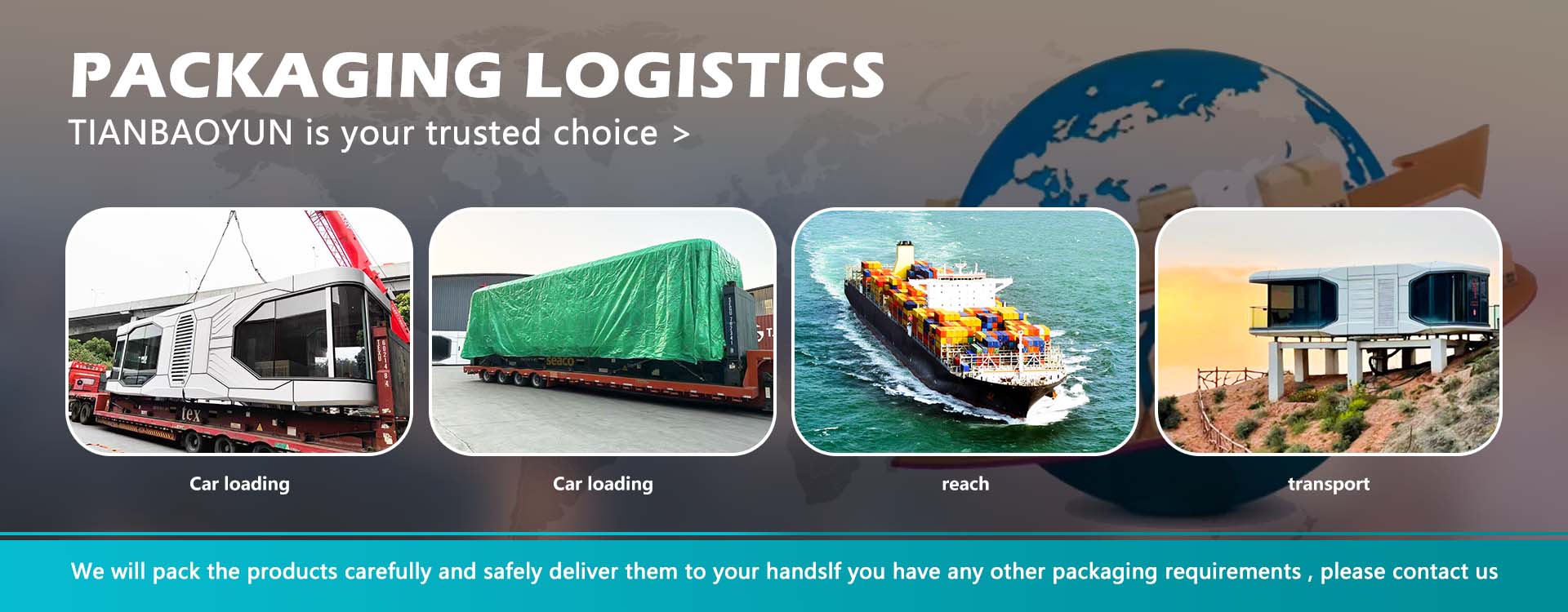
A capsule house was once a novelty for design-forward campgrounds. In 2026, it is a serious hospitality asset. Hotel groups are funding outdoor lodging at scale, guests are booking view-first accommodation over conventional rooms, and resort developers are comparing the capsule house against tents, pods, and cabins on revenue per square meter. The reason is straightforward: a space capsule house combines a weather-tight engineered shell, a full glass curtain wall, and a factory-built smart interior in a footprint that can be delivered, positioned, and opened for guests in weeks rather than seasons. This industry update examines the market forces behind the shift, what actually defines a well-built capsule unit, how it compares with glamping pods and Apple cabins, and what operators should verify before committing capital.
The 2026 Numbers: Glamping Growth Is Pulling Capsule Houses Into the Mainstream
The demand behind capsule accommodation is measurable. The Business Research Company reports the global glamping market growing from US3.37billionin2025toUS3.8 billion in 2026 at a 12.7% compound annual growth rate, with forecasts reaching US$6.08 billion by 2030. What changed in the last two years is who is funding that growth. Marriott entered through its Postcard Cabins acquisition, Hyatt partnered with Under Canvas, and Hilton aligned with AutoCamp — mainstream hospitality capital now validates outdoor lodging as a permanent category rather than a seasonal experiment. For unit suppliers, the practical consequence is a shift in buyer profile: operators now specify accommodation the way they specify hotel rooms, with attention to insulation values, glazing performance, maintenance cycles, and revenue per unit. The capsule house sits at the premium end of that specification, and that is why it has moved from showcase product to procurement line item.
What Defines a Modern Capsule House: The Aerospace-Inspired Shell, Explained
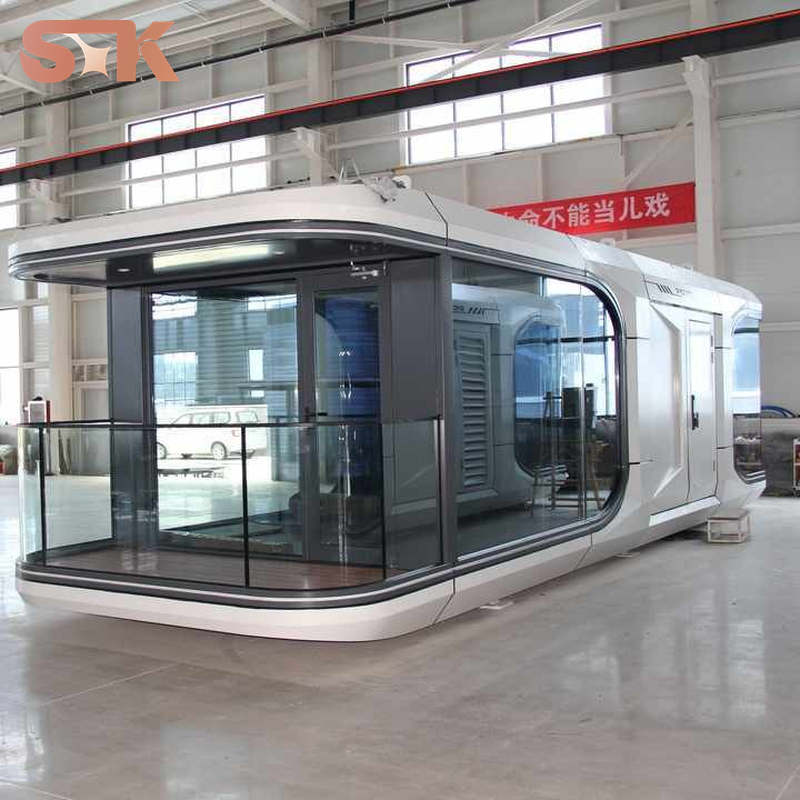
The visual signature of a capsule house — the rounded, streamlined shell — is not only styling. A continuous curved surface eliminates the hard edges where wind pressure concentrates and where water pools, which improves weather performance on exposed sites such as ridge lines, coastlines, and open fields. Modern units are built on a welded steel frame clad in insulated composite panels, then finished with a seamless exterior coating that resists fading and corrosion in salt-air environments. The rounded geometry also delivers a practical interior benefit: it removes the dead corners that make rectangular pods feel cramped, so a compact footprint reads as a continuous living space. Structural capability matters as much as appearance. Buyers should ask about wind load rating, snow load capacity, and the thermal performance of the panel assembly, because the shell is the part of the capsule house that cannot be upgraded after delivery. In this category, the enclosure is the product.
Panoramic Glass and the Integrated Deck: Designing for the View
Guests do not book a capsule house for the walls — they book it for what the walls reveal. The current generation of units is therefore built around a full-height glass curtain wall on two or three sides, with black-framed sliding doors that open the interior directly onto an integrated deck. That deck is a design decision with commercial consequences. A glass-railed outdoor platform extends the usable floor area without extending the transport envelope, gives guests a reason to stay on site after dinner, and creates the wide-angle photograph that drives direct bookings. From an engineering standpoint, the priority is glazing specification. On a unit this exposed, double glazing with a low-emissivity coating is a baseline rather than an upgrade, and buyers in hot or cold climates should confirm solar heat gain values and condensation control. Specified correctly, panoramic glass turns a thirty-square-meter capsule house into a room that feels twice its size.
Smart Systems and Off-Grid Capability: What Operators Should Specify
Because capsule houses are engineered products rather than site-built structures, their building services can be integrated rather than improvised. Current units package heating and cooling into a rooftop unit, run concealed plumbing and electrical chases through the frame, and ship with lighting, climate control, and access management prepared for a central management platform. For resort operators, that integration is the operational argument: fewer trades on site, fewer failure points, and consistent servicing across an entire fleet of identical units. Off-grid performance is the second specification that separates serious operators from hobbyists. Ask the manufacturer what the unit's insulation values are, what the power draw of the HVAC system is at full load, and whether the design supports solar arrays, battery storage, and on-site water treatment. A capsule house that can run on reduced infrastructure unlocks land that would otherwise be uneconomic — which is often where the best views, and the highest nightly rates, actually are.
Capsule House, Glamping Pod or Apple Cabin? Matching the Unit to the Site
The unit type should follow the site, not the other way around. A capsule house suits premium, view-driven locations where guests expect hotel-grade comfort, panoramic glazing, and full climate control — waterfront plots, ridge lines, and destination resorts. A conventional glamping pod costs less to specify and works well for high-volume, lower-rate inventory. Where the design brief calls for architecture with warmth and a natural material palette rather than an aerospace silhouette, the Apple cabin is the stronger choice, and operators frequently run both formats on one site: Apple cabin units for family and longer-stay guests, capsule houses for couples and short premium breaks. On constrained urban plots, capsule units also work as rooftop suites and hospitality extensions. The evaluation question is consistent across all three: which format delivers the highest revenue per square meter on this specific piece of land, after transport, installation, and servicing costs?
Cost, Lead Time and Returns: An Honest Look Before You Order
Realistic budgeting prevents expensive surprises. Across the market, standard capsule house models are generally quoted between, while larger space capsule house configurations range from roughly and above, depending on size, glazing area, insulation, and interior specification. Those figures exclude site works, and buyers should budget separately for foundation or pier preparation, utility connections, access routes for delivery vehicles, and any local permit or land-use approvals. Lead times vary with specification and production queue, so confirm dates in writing rather than assuming a standard window. On the revenue side, the calculation that matters is payback: operators in strong tourist regions commonly model capsule units against nightly rates well above conventional campground accommodation, which is why the format keeps attracting investment despite the higher unit cost. Compare total delivered cost and realistic occupancy — not headline price alone.
How the Capsule House Fits a Full Modular Range
The capsule house is one format within a broader modular family, and experienced buyers rarely order just one product type. Where a site needs the largest living area per truckload, the expandable container house delivers it. Where accommodation must be redeployed between locations, a foldable container house completes the fastest cycle. Where freight and storage costs dominate, a flat pack container house ships as stacked panels with minimal volume. Where on-site labor is scarce, a quick assembly container house is engineered for simple crane-and-bolt erection. And for compact, technology-led living, the capsule house and Apple cabin occupy the design-forward end of the range. Because these systems share steel-frame construction principles and factory-controlled production, maintenance practices and spare-part planning carry across an entire portfolio — which is precisely why developers standardize on a single supplier family rather than assembling a mixed fleet.
The Bottom Line
The capsule house has crossed from novelty to procurement line item. With the glamping market growing toward US$6.08 billion by 2030 and major hotel groups now funding outdoor accommodation, operators need units that deliver hotel-grade comfort on land that conventional construction cannot serve. The capsule house answers that requirement through three things: an engineered weather-tight shell, a panoramic glazed facade with integrated outdoor deck, and factory-integrated smart systems that reduce on-site work and servicing complexity. Buyers who verify shell ratings, glazing performance, off-grid capability, and total delivered cost will find the format delivers on its promise — and holds its value as the category matures.
Frequently Asked Questions
What is a capsule house?
A capsule house is a factory-built, transportable living unit with a rounded, engineered shell and panoramic glazing, designed for compact, high-comfort accommodation. Units are typically built on steel frames with insulated composite panels and shipped with integrated heating, cooling, lighting, and plumbing.
How much does a capsule house cost in 2026?
Standard models generally range, while larger space capsule house configurations typically run from or above. Site preparation, utility connections, and permits are budgeted separately.
Is a capsule house suitable for off-grid locations?
Yes, when specified correctly. Buyers should confirm insulation values, the power draw of the climate control system, and whether the design supports solar arrays, battery storage, and on-site water treatment.
How does a capsule house compare with a glamping pod?
A capsule house generally offers a more robust engineered shell, larger glazing areas, and higher-specification integrated systems, which suits premium, view-driven sites. A glamping pod typically costs less and suits high-volume, lower-rate inventory.
Can a capsule house be used year-round?
Yes. With double glazing, low-emissivity coatings, adequate insulation, and a properly sized HVAC system, capsule units operate in winter conditions. Buyers in snow-load regions should also confirm the roof's structural rating.


