
 Shqip
Shqip لالعربية
 Polski
 رسی
رسی Deutsch
 Русский
 Français
 한국어
한국어 Nederlands
 Čeština
 Bahasa Melayu
 Português
 日本語
日本語 Svenska
 Kiswahili
 ไทย
ไทย Türkçe
 Українська
 Español
 Italiano
 हिन्दी
 Bahasa Indonesia
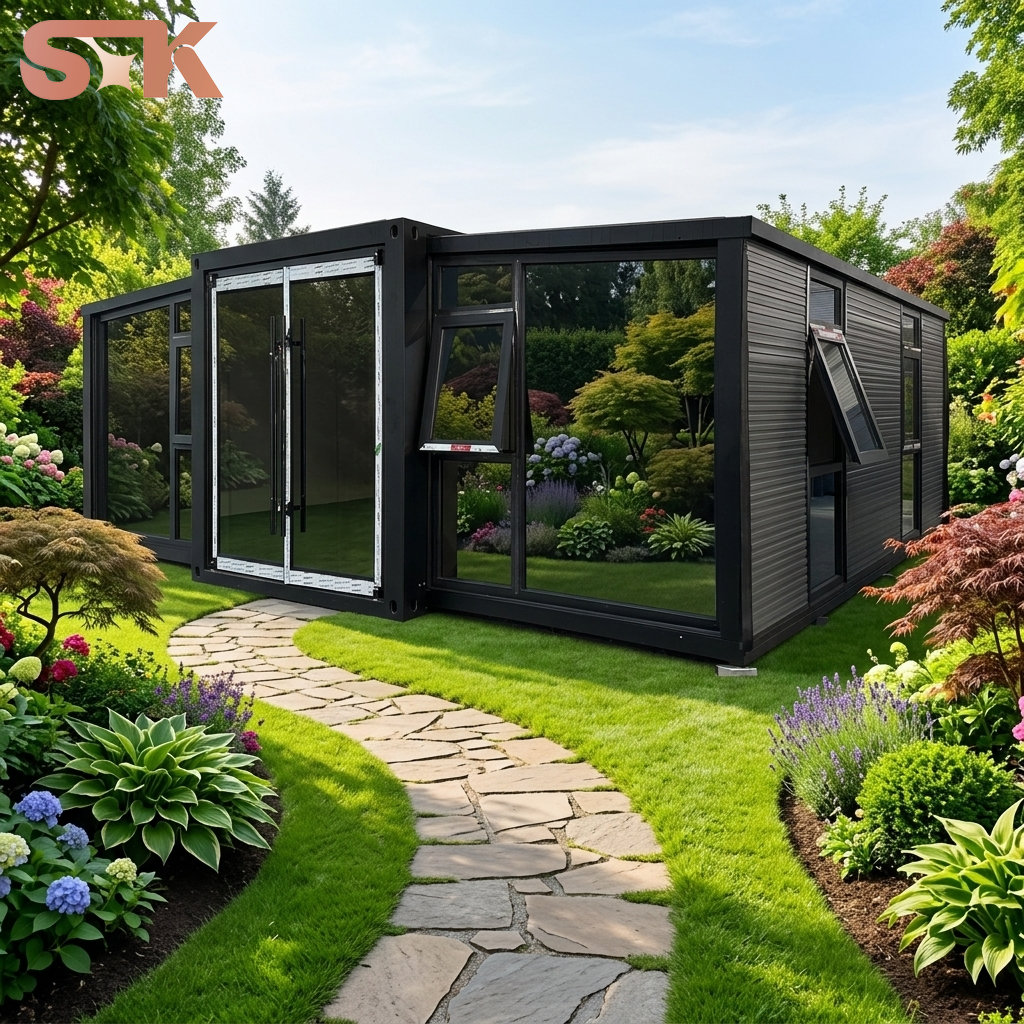
What is a double-wing expansion box-type house and what are its features?
The double-wing expansion box-type houseis a modular and mobile integrated house. It is mainly composed of galvanized steel plates as the frame, connected by welding technology. It is equipped with wall panel materials such as glass wool, rock wool or EPS boards, forming a living or working space with both structural strength and insulation performance. Its core design concept is to meet the diverse needs of temporary or long-term use through modular combination and space expansion functions. It is suitable for scenarios such as construction site accommodation, mobile office, emergency rescue, etc.
I. Structural Design and Technical Principles:
The frame of the double-wing expandable box-type house is made by welding galvanized steel plates, featuring corrosion resistance and wear resistance. The main body of the house is composed of standard modules, which are connected by bolts or hinges, allowing for quick assembly or disassembly. Its "double-wing expansion" function is achieved through lateral sliding tracks: during transportation or storage, the two side boxes contract to reduce volume; when in use, the boxes are expanded outward by mechanical or manual means, increasing the indoor area from the base module's 18 square meters to 36 square meters, doubling the space utilization rate. The wall panel filling materials can be selected as needed: glass fiber wool and rock wool provide A-level fireproof performance, while EPS boards focus on lightweight and low cost.
II. Usage Method and Scene Adaptation:
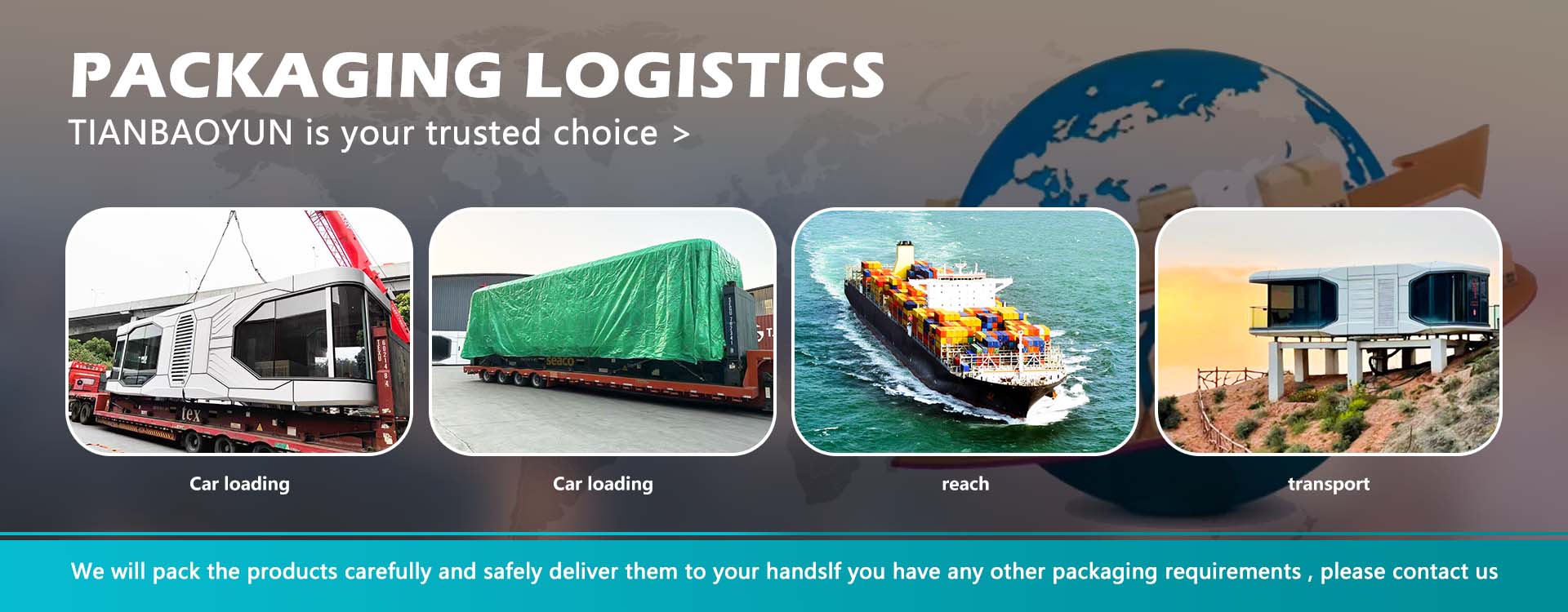
This house can be directly placed on a flat surface or fixed to the foundation using anchor bolts. During assembly, please note the following: Before unfolding the box, check the lubrication of the tracks to avoid jamming; when installing the wall panels, ensure the integrity of the sealing strips to prevent water leakage. The interior layout can be flexibly adjusted by using partitions to divide the house into bedrooms, office areas, or bathrooms and other functional spaces. Its mobility advantage lies in the following: During transportation, the house can be contracted to the size of a standard container and transported separately by a trailer; upon arrival at the destination, it can be unfolded and fixed without the need for large machinery, making it suitable for remote areas or temporary projects.
III. Technical Highlights and Practical Performance:
Compared to traditional mobile houses, the double-wing expansion box-type house offers better space efficiency and adaptability. Traditional houses have a fixed area, while the expansion design can dynamically adjust the space according to the number of people. For example, the 36-square-meter version can accommodate 8-10 people for work or 6 people for living. The diversity of wall panel materials enables it to cope with different climates: rock wool panels are heat-resistant and suitable for humid environments in the south; EPS panels have excellent insulation properties and can reduce energy consumption in northern winters. Additionally, the modular structure supports local replacement. If a wall panel is damaged, only the corresponding component needs to be replaced, resulting in lower maintenance costs than a complete renovation.
IV. Customization and Scalability:
The bi-wing expansion box-type house offers deep customization options for size, color, and functionality. The size can be adjusted by changing the length or width as per requirements. For instance, it can be extended to 45 square meters to meet the needs of large offices. The color offers multiple options to match the company's VI or the environment. Functionally, it can integrate water and electricity systems, solar panels, or smart locks to achieve "turnkey" delivery. For special scenarios, such as medical stations or laboratories, customizations based on drawings can be made to add sterile processing modules or ventilation systems to meet specialized usage requirements.


